

Can a cop search your phone without a warrant? That question carries serious weight in modern life. Cell phones store photos, text messages, emails, contact lists, location history, banking records, and social media accounts. A device that fits in a pocket often contains years of personal activity.
Digital data stored on a phone reveals far more than what could be found inside a wallet or purse. Access to that information allows law enforcement to see private communications, movement patterns, financial details, and personal relationships. Because of that depth of information, a cop searching your phone raises major privacy concerns.
Privacy protections exist to guard people against intrusive government action. Accessing the contents of a phone without proper legal authority can expose intimate details of daily life.
Many people assume police officers can search anything during an arrest. Court rulings have limited that assumption. Legal boundaries now restrict when and how officers may access digital data.
Core legal issue centers on a simple question: can a cop search your phone without a warrant?
What Does the Constitution Say?
The answer is short and clear: No, a cop cannot search your phone without a warrant due to the Fourth Amendment.
The Fourth Amendment to the United States Constitution protects individuals against unreasonable searches and seizures. Law enforcement generally must obtain a warrant supported by probable cause before conducting a cop search your phone.
- Probable cause that evidence of a crime will be found in a specific place
- Judicial approval through a warrant issued by a neutral judge
Probable cause means officers must present concrete facts that create a reasonable belief that evidence exists on the device. Suspicion or a hunch is not enough. A judge reviews the request and decides if legal standards are met before authorizing a cop to search your phone in most situations.
Riley v. California 2014
The Supreme Court addressed digital privacy directly in 2014 in Riley v. California. Justices ruled that police generally must obtain a warrant before searching digital data on a cell phone seized during an arrest.
- Phones contain years of personal communications
- Devices store location history, photos, banking details, and private records.
- Digital data can reveal patterns of behavior and associations
The decision rejected the argument that a phone should be treated like a wallet or cigarette pack found during an arrest.
When Is a Warrant Necessary?

The general rule remains firm. Police must obtain a warrant supported by probable cause before conducting a cop search of your phone. Lawful arrest alone does not automatically give officers authority to examine digital content.
Riley’s decision made clear that traditional search incident to arrest rules do not extend to digital data. An arrest may justify taking possession of the device, but not searching its stored information.
Scope of a Proper Warrant
A valid warrant must clearly describe what officers are permitted to search and seize. Courts do not allow unlimited access once a warrant is issued.
- Specific categories of data such as text messages or call logs
- Relevant time periods connected to the alleged crime
- Particular applications or files tied to the investigation
Officers who go outside those limits risk having evidence suppressed. Scope matters greatly when reviewing whether a search of your phone complied with constitutional standards.
Physical Seizure Versus Digital Search
Police may seize a phone during an arrest to prevent the destruction of evidence. Taking possession of the device is legally different than accessing its contents.
Accessing stored information usually requires a separate warrant.
The distinction between holding a phone and performing a search of your phone is central to Fourth Amendment analysis.
Exceptions to the Warrant Requirement

Certain narrow exceptions allow officers to act without a warrant in limited circumstances. Courts interpret these exceptions strictly and place the burden on law enforcement to justify their actions.
Consent
Consent is one of the most common exceptions. If a person voluntarily agrees to let officers inspect a device, no warrant is required.
- Permission must be given freely and not through threats or coercion
- Person giving consent must have authority over the device
- Scope of consent limits what officers may examine
@lawbymike Can Cops Make You Unlock Your Phone? #cops #law #lawyer #rights #police ♬ original sound – Law By Mike
Anyone has the right to refuse. A clear statement such as, “I do not consent to a search,” protects that right. Once consent is granted, a cop may proceed within the boundaries of that permission.
Exigent Circumstances
Emergency situations may justify immediate action. If officers reasonably believe there is an urgent threat to public safety or a serious risk that evidence will be destroyed, a limited search may occur without waiting for a warrant.
- Immediate danger to a victim
- Active threats involving weapons
- Imminent destruction of critical evidence
Judges closely review these claims after the fact. Exigent circumstances are rare and fact-specific, not a routine justification for a cop search your phone.
Border Searches
Law enforcement and customs agents possess broader authority at international borders and airports. Device searches sometimes occur without a traditional warrant in those settings.
Courts have debated limits on digital searches at the border. Some rulings require at least reasonable suspicion for more intrusive forensic searches of electronic devices. Legal standards vary depending on jurisdiction and the type of search conducted.
Travelers should recognize that the border context can alter how a cop’s search of your phone is analyzed under constitutional law.

Search Incident to Arrest
Traditional search incident to arrest doctrine allows officers to search a person and areas within immediate control to protect safety and prevent the destruction of evidence.
Riley clarified that digital data does not fall within that automatic authority. Officers may seize the phone to secure it, but accessing photos, messages, or other files generally requires a warrant.
Arrest alone does not justify a cop searching your phone without judicial approval.
For a breakdown of another common misconception about police procedure, check out our guide on whether police have to read you your rights.
Unlocking Phones and Biometric Access
Legal issues become more complex when officers attempt to unlock a device. Courts have examined whether police may compel a person to unlock a phone using a fingerprint or facial recognition.
Debate often focuses on the distinction between physical acts and testimonial communication.
Some courts treat biometric unlocking differently from forcing disclosure of a passcode. Compelling someone to reveal a memorized code may raise Fifth Amendment concerns related to self-incrimination.
Rules vary across states and federal circuits. Anyone facing a demand to unlock a device during a cop search your phone should consult a defense attorney immediately.
Legal Consequences of Warrantless Searches
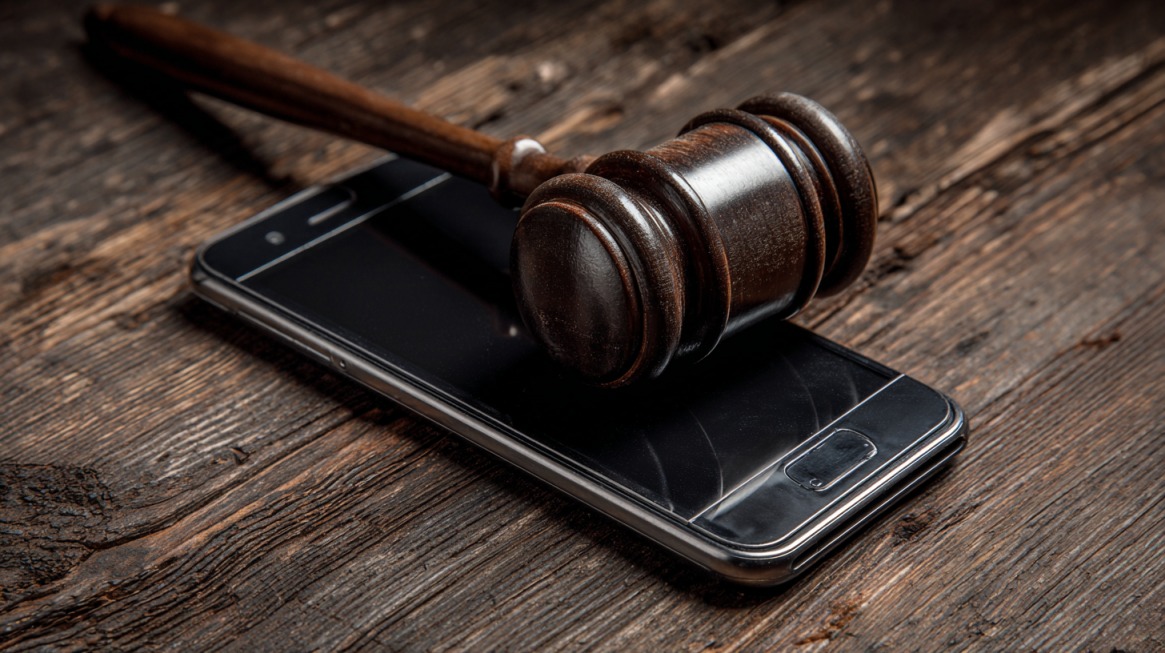
If officers conduct a search of your phone without a valid warrant and no recognized exception applies, evidence obtained may be suppressed.
- Illegally obtained evidence cannot be introduced at trial
- Charges may weaken significantly if key digital evidence is excluded
- Prosecutors may reconsider or dismiss certain counts
Defense attorneys typically file motions to suppress evidence based on Fourth Amendment violations. Courts then evaluate if the search met constitutional requirements.
Strong legal representation can make a substantial difference when challenging an unlawful search.
Summary
The general rule remains consistent. A cop’s search of your phone usually requires a warrant supported by probable cause due to Fourth Amendment protections.
Exceptions exist, including consent, exigent circumstances, and certain border situations, but those are limited.
Knowledge of rights can protect privacy and strengthen a legal defense if charges arise.