
A private pond can raise property value and change the look of a yard. Legal trouble begins when water escapes, drainage shifts, or someone gets hurt.
Flooded basements, unstable embankments, mosquito infestations, and child injuries turn landscaping into liability.
Courts examine duty of care, foreseeability of harm, and compliance with environmental rules when disputes reach litigation.
So, the private pond becomes a legal issue the moment damage can be traced to design, construction, or maintenance decisions.
How A Backyard Upgrade Turns Into A Lawsuit?

The transformation from decorative feature to legal dispute usually happens slowly. Soil saturation changes beneath the surface.
Drainage routes that once carried stormwater away from neighboring properties adjust in subtle ways. Retaining walls bear weight; they were never engineered to sustain long-term.
When visible damage finally appears, whether in the form of erosion, foundation stress, or pooling along a shared boundary, the damage often feels sudden even though the underlying cause has been developing quietly over time.
In many disputes, attention turns back to the original construction decisions. Courts and experts examine whether the grading accounted for foreseeable rainfall, whether overflow systems were designed with adequate capacity, and whether soil conditions were properly evaluated before excavation.
A pond that interferes with natural drainage patterns can expose the owner to claims that the installation altered the equilibrium ofthe surrounding land in a way that was predictable and preventable.
How Ongoing Maintenance Shapes Responsibility
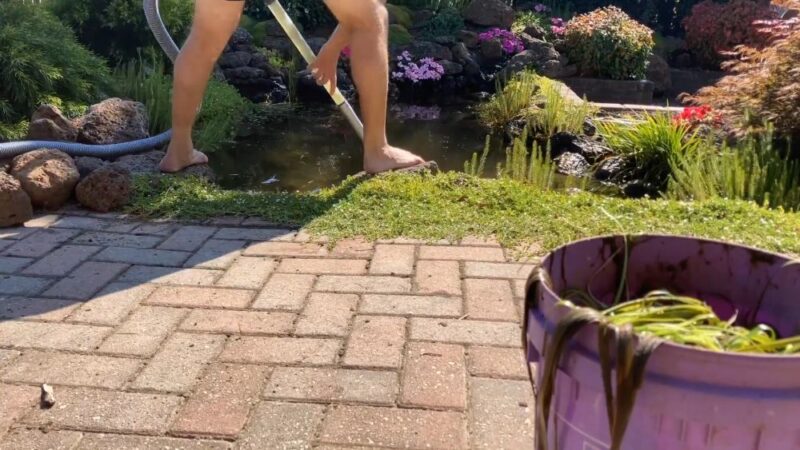
Private ponds need regular upkeep. Over time, sediment builds up, pumps wear down, liners weaken, and edges shift. If those issues are ignored, the pond can overflow, leak, or destabilize surrounding soil.
When damage happens, the key question becomes whether the owner kept the pond in reasonable condition. Courts look at whether problems were visible and whether action was taken. If maintenance was neglected and that neglect led to flooding or structural damage, liability becomes easier to establish.
Responsibility often depends less on the original installation and more on how the pond was managed over time.
At some point, basic maintenance is not enough. Structural issues such as poor grading, weakened embankments, or failing liners require more extensive repair.
Pond restoration addresses those deeper problems. It may involve reshaping the surrounding land to correct drainage, reinforcing structural edges, replacing damaged liners, or removing sediment to restore proper capacity.
These measures directly reduce the risk of overflow, seepage, and soil movement.
When Water Crosses Property Lines
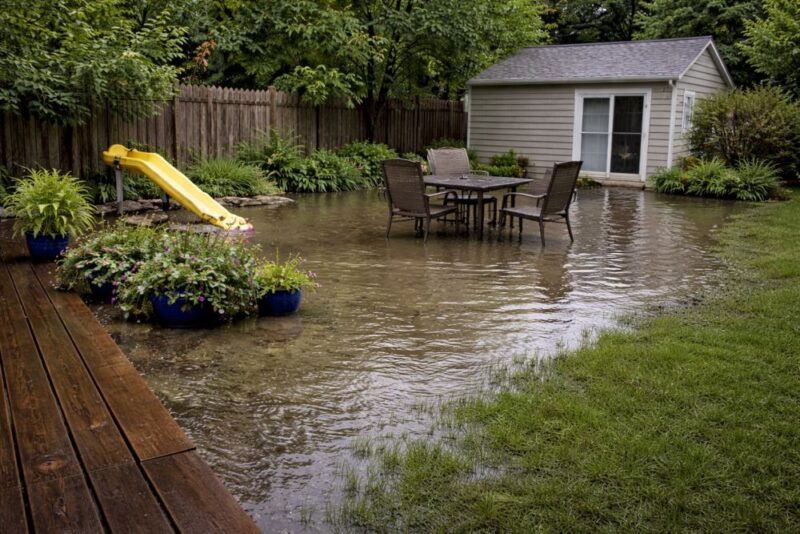
The legal shift happens when impact leaves the property. Up to that point, a pond problem is internal. Once a neighbor suffers damage, the issue becomes external and legally actionable.
Trespass And Physical Invasion
If water flows onto adjacent land and causes measurable harm, that can be treated as trespass. The concept is straightforward. One property owner does not have the right to send water onto another property in a way that causes damage. Courts look at whether the pond altered natural conditions and whether that alteration directly caused the intrusion.
The focus here is not on aesthetics or design choices. It is on physical invasion and resulting loss.
Nuisance And Interference With Use
Even without dramatic flooding, a pond can interfere with how a neighbor uses their property. Persistent standing water near a boundary, recurring runoff after rainfall, or moisture that limits construction or landscaping can form the basis of a nuisance claim.
In these cases, the argument centers on unreasonable interference. The question becomes whether the pond substantially disrupted normal property use.
Negligence And Preventable Harm
Negligence enters the discussion when the damage could have been avoided through reasonable care. If proper grading, drainage controls, or reinforcement would have prevented the problem, that becomes central.
Here, the court evaluates foreseeability. Was the risk obvious? Were safeguards standard practice? Was the owner aware of the warning signs?
Injuries, Safety Hazards, And Common Claims

Property damage is one side of pond liability. Personal injury is the other, and in many cases it carries higher financial stakes.
Water features create risk simply because they combine water, depth changes, slippery surfaces, and mechanical equipment in one place. When someone gets hurt, the legal focus shifts from drainage and boundaries to duty of care and preventable danger.
Slip And Fall Accidents
Wet stone, algae growth, loose gravel near the edge, or uneven decking can all lead to falls. These cases often involve guests, delivery workers, or contractors who were lawfully on the property. If the hazard was visible for some time and nothing was done to correct it, a negligence claim becomes more likely.
Courts look at whether the surface was reasonably safe and whether warnings or repairs were provided.
Drowning And Near Drowning Incidents
Depth changes, steep drop offs, and poor visibility in murky water increase drowning risk. Liability questions usually focus on supervision, barriers, and access control. In residential areas, an unfenced pond can raise serious legal exposure if a child gains access and is injured.
These cases are heavily fact driven and often involve expert testimony about safety standards.
Electrical And Mechanical Hazards
Pumps, lighting systems, and filtration equipment introduce electrical components near water. Faulty wiring, improper grounding, or exposed connections can cause shock injuries. If installation did not meet safety codes or maintenance was neglected, that detail becomes central in litigation.
Attractive Nuisance And Child Injury Claims
Courts apply stricter scrutiny when children are involved. If a water feature is easily accessible and presents a danger that a child would not fully understand, the property owner may be held responsible even if the child entered without permission.
Frequently Asked Questions
Final Thoughts
Private ponds and decorative water features can add character to a property, but they also carry responsibility. Once water alters drainage patterns, creates safety hazards, or affects neighboring land, the issue moves beyond landscaping and into legal territory. Most disputes come down to control, foreseeability, and whether reasonable steps were taken to prevent harm.
Careful design, consistent maintenance, and timely restoration reduce the risk of damage and liability. Ignoring small structural problems or early warning signs tends to increase exposure over time. When water is involved, minor oversights can turn into measurable losses.