

Yes, you can beat a speeding ticket, but not by arguing that speeding is harmless, begging for sympathy, or hoping the officer simply does not show up.
The strongest defenses usually come from one of three places: the state cannot prove the speed reliably, the ticket or procedure has a meaningful defect, or the driver uses a local court option that reduces or avoids the conviction before the case ever reaches a full hearing.
That matters because paying a speeding ticket is usually treated as a conviction, and in many states, that can add points to your driving record and raise insurance costs. California courts, for example, state plainly that paying a ticket is treated as a conviction and that points can stay on your record for years and affect insurance.
A smart defense starts with realism. Courts and hearing officers hear weak excuses every day. What tends to work is a clean factual theory backed by documents, photographs, timing issues, calibration or certification issues, unclear signage, mistaken vehicle identification, or procedural rights that the court itself recognizes.
This is especially important because speeding enforcement is taken seriously: NHTSA says speeding killed 11,775 people in 2023, and states have continued expanding both officer-based and automated enforcement.
The First Thing to Understand Is What Kind of Ticket You Got

Before building any defense, you need to know whether the ticket came from an officer on the roadside or from a speed camera or other automated system. That distinction changes almost everything, including what evidence matters and whether points or insurance consequences even apply.
IIHS notes that in most states, camera citations are treated as civil offenses rather than moving violations, which often means no license points and no insurance effect, though some states treat them more like officer-issued tickets. NHTSA also notes that automated enforcement authority varies significantly by state and local law.
Ticket type
What usually matters most
Common path to contest
Officer-issued ticket
Officer observations, radar, lidar, pacing, calibration, training, location facts
Not guilty plea and hearing or trial
Camera ticket
Photo/video evidence, notice compliance, owner-driver rules, local camera law
Administrative contest or court challenge
Written-declaration state option
Your written statement, attachments, court deadlines, officer written response
Paper submission before due date
In some places you may also have a written process instead of an in-person hearing. California courts expressly allow a trial by written declaration for eligible traffic infractions, and Oregon courts in some counties also allow trial by declaration or affidavit.
What Actually Improve Your Odds
The drivers who do best are usually the ones who treat the case like a file, not an emotional event. They read the citation carefully, preserve every deadline, gather physical evidence early, and focus on proof problems instead of speeches. A speeding case is usually won by making the government’s evidence weaker, not by making yourself sound more likable.
That means your first review should be mechanical. Check the exact statute cited, the alleged speed, the posted speed limit, the date, time, mile marker or street location, lane or direction of travel, and whether the officer described how speed was measured.
Then compare that information to what the road actually looked like. If a sign was obscured, missing, too close to the enforcement point, or inconsistent with nearby zones, you want dated photos and ideally a short video taken safely and lawfully.
If traffic was dense or there were multiple vehicles near you, that can matter in mistaken-identification cases involving radar or visual estimation. The goal is not to create doubt out of thin air, but to document a real reason the reading may have been assigned to the wrong vehicle or taken in an unclear enforcement environment.
The Strongest Defenses Are Usually Evidentiary, Not Emotional
Most speeding cases turn on proof. If the state used radar, lidar, pacing, or a camera, your defense should focus on how that proof was obtained and whether it is admissible and persuasive.
NHTSA’s officer training materials make clear that radar and lidar use must comply with law, court decisions, and department policy, and that officers must be prepared to present evidence and testimony in court.
Washington State Patrol says courts in that state require speed-measuring devices to undergo testing and certification for accuracy before the evidence is admissible, and WSP maintains a certification program for those devices. Virginia law similarly recognizes the importance of calibration and accuracy records in court proceedings involving speed-detection devices.
That gives you a practical roadmap. If the speed was measured electronically, you want to know four things: what device was used, whether that device was certified or calibrated as required, whether the operator had required training, and whether the officer can connect that reading specifically to your vehicle under the conditions present that day.
Evidence issue
Why it matters
What to look for
Device certification or calibration
A speed reading is only as useful as the device’s documented accuracy
Certification records, calibration logs, testing dates
Officer training
Some states or agencies require trained operators
Training certificate, course completion, local statutory requirement
Vehicle identification
Radar can detect multiple vehicles; lidar is narrower but still depends on targeting
Traffic density, lane position, officer notes, dashcam/bodycam
Pacing details
Pacing requires a stable follow distance and reliable patrol speedometer
Distance paced, duration, officer description, squad speedometer calibration
This is where many drivers make a mistake. They argue abstractly that “radar is not always accurate.” Courts generally will not dismiss a ticket on that kind of generic claim.
What matters is whether this device, this officer, and this stop meet the legal and factual standard in your jurisdiction.
Discovery Can Matter More Than Your Hearing Speech
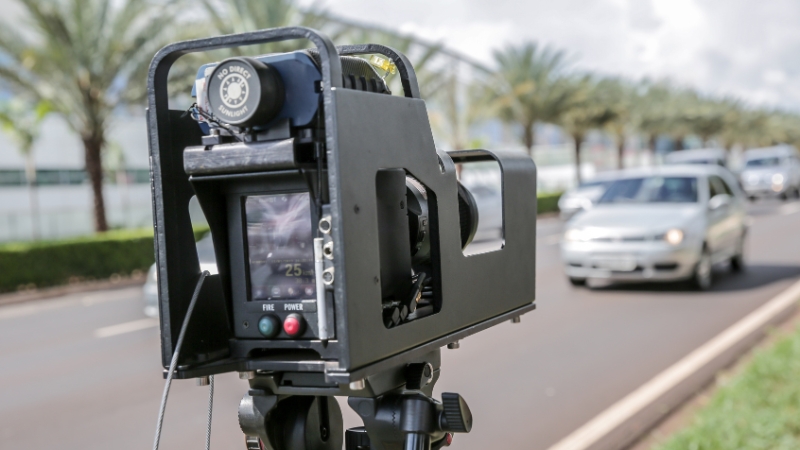
If your jurisdiction allows discovery in traffic cases, use it. Nolo’s traffic-court guidance identifies common discovery items such as the officer’s notes and calibration records for the radar or other speed-measuring device. Some counties and courts also reference calibration records as part of traffic-related discovery materials.
In practical terms, discovery can tell you whether the case is strong enough to fight or whether you should shift to a reduction strategy. If you ask for discovery and receive incomplete records, no calibration documentation, unclear notes, or no video despite the existence of dashcams or bodycams, that may become useful at the hearing.
If you get a clean packet with solid documentation, you now know not to waste your best leverage on a bad technical argument.
The key is timing. Courts are deadline-driven. Oregon courts state that to request a trial you must plead not guilty and make the request before the applicable deadline. California’s courts say trial-by-written-declaration requests must also be made before the due date, and the required form and payment rules come from the handling court.
Paying First Can Quietly Destroy Your Best Option
Many drivers treat the fine like a parking ticket and assume they can “sort it out later.” That can be a serious mistake.
California courts state that paying the bail or fine without contesting the ticket is treated as a conviction. That conviction can add a point to the DMV record and can affect insurance premiums or even lead to cancellation in some cases.
That does not mean you should never pay anything up front. Some procedures, such as California’s trial by written declaration, may require posting bail before the court decides the case, with a refund if you win or owe less.
The important point is to know whether a payment is simply preserving your right to contest or is being treated as acceptance of guilt.
When a Written Defense Makes Sense
@defence_solicitors Caught speeding? 🚔 Don’t panic! There are defences you can consider to challenge that ticket. Remember, being informed is your best defence! #speedingticket #StayInformed #law #lawyer #fyp #foryou #lawyersoftiktok #explore #car #viral #driving #police #trending #criminallaw #lawyersofinstagram #uklaw #solicitors #crime #legalinformation #legaltips #lawschool #lawstudent #learnontiktok ♬ original sound – Stuart Miller Solicitors
A written defense can be useful when your case is clean, document-heavy, and not dependent on live cross-examination. California’s courts explain that in a trial by written declaration, the driver submits a written statement and evidence, the court requests a written statement from the officer, and a judge decides the matter based on those written submissions.
If the driver loses, a new trial may still be available in some situations. Oregon courts in some counties also describe trial-by-declaration procedures for traffic cases.
A written approach works best when you have objective proof, such as timestamped photos of blocked signage, GPS records showing a different location context, repair or emergency records establishing a non-speed explanation for the stop context, or a clear legal argument based on notice or procedure.
It is weaker when your best point is that the officer misidentified your car in moving traffic, and you need to force detailed testimony.
The Most Common Winning Angles
Drivers usually win on one of a limited set of themes. The first is proof weakness. That means the state cannot convincingly show your speed with reliable evidence. Maybe the officer’s notes are sparse.
Maybe the calibration record is missing or dated outside the required window. Maybe pacing was too brief or poorly explained. Maybe traffic conditions created real doubt about which vehicle the officer clocked.
The second is road-condition or signage problems. If the speed limit transition was poorly marked, hidden, inconsistent, or unusually abrupt, that can support either a full defense or a reduction. This is especially important in school zones, construction zones, and municipal boundary changes.
The third is procedure. That includes deadline mistakes by the state, defective notice in camera cases, or failure to comply with statutory hearing steps.
Camera programs are particularly dependent on local legal authorization and process, because NHTSA notes that states differ sharply in what automated enforcement they allow and how it must be structured.
The fourth is pre-hearing resolution. Sometimes the best “win” is avoiding the conviction rather than winning an all-or-nothing trial. Courts in some places offer traffic school or similar dispositions.
California courts explain that traffic school can prevent DMV points in certain cases, although insurance treatment can still depend on circumstances and license class.
What Does Not Usually Work

Some arguments sound satisfying but rarely move the result. Saying you were “keeping up with traffic” is usually not a defense because the posted limit still controls unless your state law says otherwise in a very specific context. Claiming the officer was hiding is also usually irrelevant if the enforcement itself was lawful.
Arguing that your speedometer was off may help only in narrow pacing or notice contexts and usually does not defeat a direct electronic reading. And relying entirely on the idea that the officer will not appear is risky because officer attendance rules vary.
Massachusetts, for example, says the law does not require the ticketing officer to appear personally at a hearing; a police department representative may present the case.
That last point matters because a lot of internet advice is based on one county, one state, or an old court custom. Traffic procedure is local. A tactic that works in one state may fail completely in another.
How to Prepare For the Hearing Without Wasting Your Chance
A good hearing presentation is short, organized, and built around one main theory. You do not want ten weak points. You want one or two strong ones. If your case is about unreliable proof, structure everything around that. If your case is about defective signage, structure everything around notice and road layout.
Bring a simple packet with the citation, your photos, a map printout if helpful, any discovery responses, and a one-page outline. If the jurisdiction allows witnesses and you have one, keep the testimony narrow and factual.
Oregon courts note that at trial you may present evidence and call witnesses in traffic cases. Massachusetts explains that traffic hearings there are informal and that formal rules of evidence do not apply, which means concise factual presentation matters even more than courtroom theatrics.
If cross-examination is allowed, keep it disciplined. The point is not to argue with the officer. The point is to lock down facts: what device was used, when it was tested, what traffic looked like, how long the pacing lasted, where the officer was positioned, and how the officer identified your vehicle rather than another one nearby.
You are looking for a gap, not a confession.
Camera Tickets Require a Different Mindset
Got a speed camera ticket in the mail? Wondering what it means, or if you can fight it?
Here’s what most drivers don’t know about these automated fines. 👉 https://t.co/ZyHdy1xJnu#SpeedCamera #Toronto #RoadSafety #DriveSafe pic.twitter.com/YKnROpOB8Q— X-Copper (@XCopperLegal) August 20, 2025
If the ticket came from a speed camera, first verify whether the notice was legally issued and whether your state treats it as a civil owner-liability matter or a moving violation.
IIHS notes that in most states camera citations do not carry points or insurance effects, but there are exceptions, and some statutes allow the registered owner to rebut the presumption that they were the driver. NHTSA emphasizes that state law may authorize, restrict, or prohibit forms of automated enforcement.
That means the best defense may not be “the device was wrong.” It may be that the notice failed statutory requirements, the camera was not authorized at that location, the zone timing was wrong, the owner was not the driver and the statute provides a method to establish that, or the photos do not show enough to support liability.
IIHS also notes that speed safety cameras are often set to trigger only when a vehicle is significantly over the limit, commonly around 10 or 11 mph over, though that can be lower in places such as school zones. That makes factual defenses based on tiny overages less likely to work in camera cases than notice or legal-authority defenses.
Sometimes the Smart Move is Not a Trial But a Reduction
Not every ticket should be fought to the end. If the evidence is solid and the alleged speed is not extreme, the better outcome may be a reduction to a non-moving violation, a deferred disposition, traffic school, or another local diversion mechanism. This is especially true if your insurance exposure is more important than the fine itself.
That still counts as a practical win. Courts exist to process cases, and many jurisdictions have ways to resolve lower-level tickets without forcing a full evidentiary contest. The exact options vary, but the strategy is consistent: preserve your right to contest first, then evaluate whether the strongest outcome is dismissal, reduced charge, or no-point resolution.
A Realistic Framework For Deciding Whether to Fight
Situation
Best strategy
Clear proof issues with radar, lidar, pacing, or vehicle identification
Contest fully and focus on evidence
Signage or zone problem supported by photos
Contest with a road-notice theory
Camera ticket with owner-driver or notice issues
Attack statutory compliance first
Clean evidence against you, modest speed, decent record
Seek reduction, school, or deferred option
Very high alleged speed or reckless-driving overlap
Consider a lawyer quickly because the stakes are much higher
The last category matters because once the allegation moves beyond a simple infraction into reckless driving, criminal exposure, license risk, or very high insurance impact, the case changes. At that point, the right move is often professional representation, not DIY traffic-court tactics.
The Bottom Line
View this post on Instagram
You beat a speeding ticket by treating it like an evidence problem and a procedure problem, not a morality play. The best cases to fight are the ones where the state’s speed proof is weak, the road facts are on your side, or the local court offers a process that lets you avoid the conviction even if you do not win outright.
Paying without understanding the consequences can lock in a conviction, while a timely not-guilty request can preserve leverage. Courts and agencies make clear that deadlines, device certification, local hearing rules, and the type of ticket all matter.