
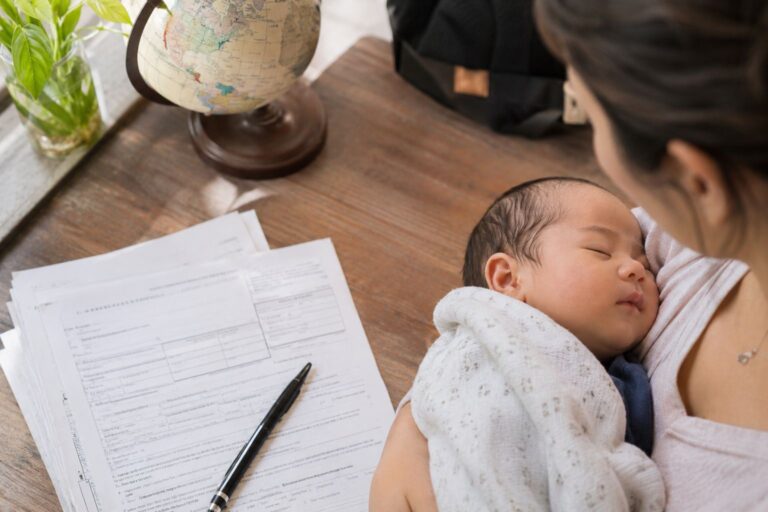
Having a baby in another country means dealing with two legal systems at once. Parents need to register the birth locally, establish the child’s citizenship, arrange health insurance, and obtain the documents required for international travel.
For American parents, one of the biggest concerns is proving that their child qualifies for US citizenship. A baby born overseas does not automatically receive a US birth certificate, and having an American parent does not guarantee citizenship in every situation.
The first 60 days are a useful period for getting the paperwork organized. However, some countries impose deadlines much sooner, especially for birth registration and health insurance.
First 7 Days, Register the Birth and Obtain Official Documents
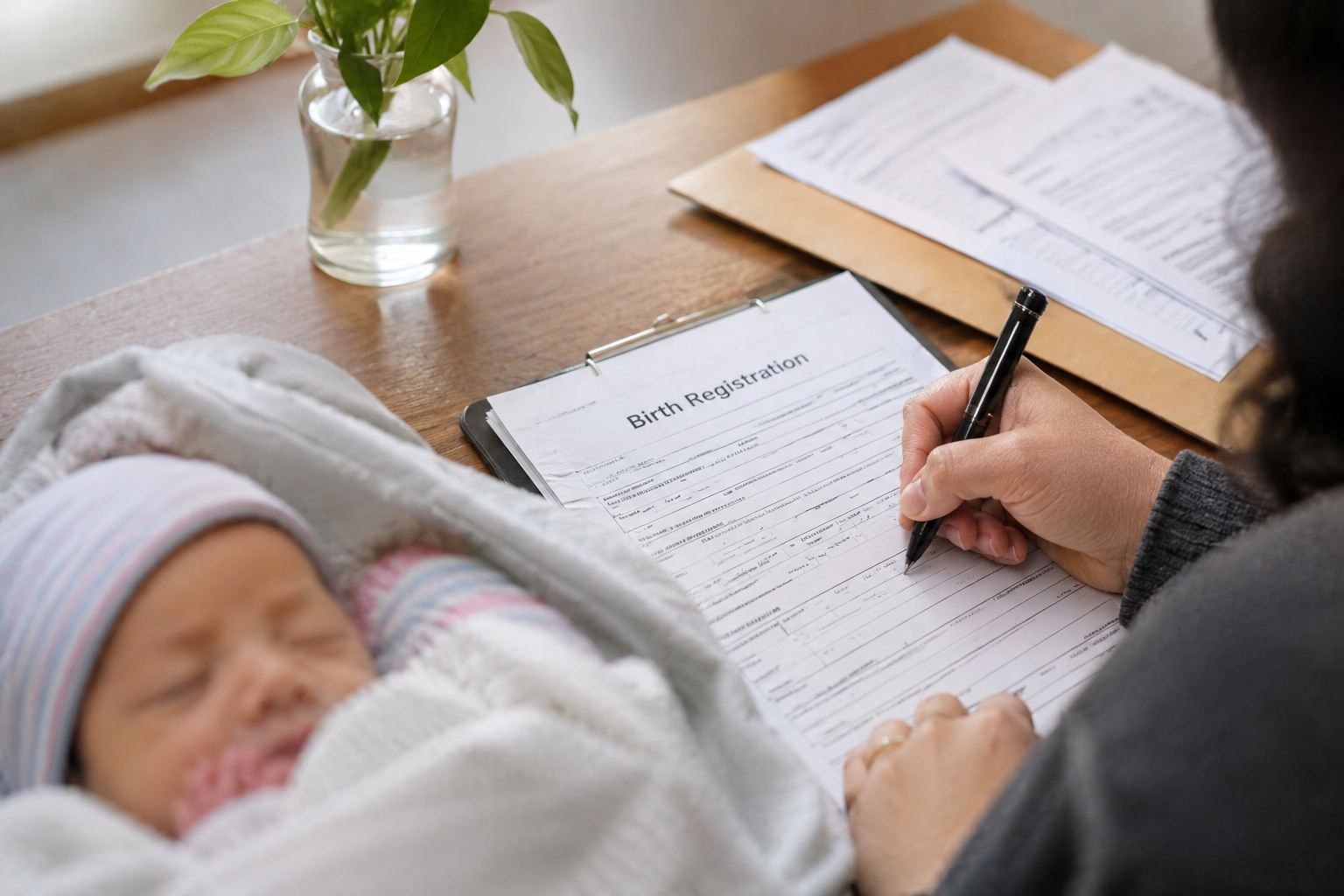
The first legal task is registering the birth in the country where the baby was delivered.
Hospitals usually provide a medical record confirming the birth, but that document is not necessarily an official birth certificate.
Parents may need to contact a civil registry office, municipality, or another government authority to complete the registration.
Requirements depend on the country. Some authorities request passports, marriage certificates, or documents establishing the legal relationship between the child and both parents.
Check that the child’s name, date of birth, place of birth, and parental information are recorded correctly. A mistake on the original certificate can create problems when applying for passports or citizenship documents later.
Request additional certified copies if they are available. Different government agencies may require original or officially certified documents.
Parents should also ask if the certificate needs an official translation or an apostille before another country will accept it.
For additional context on document verification and translation standards, see our guide to submitting academic documents in the US.
Days 7 to 21, Check if the Baby Qualifies for US Citizenship
A child born overseas to an American parent may acquire US citizenship at birth, but the requirements depend on the citizenship of both parents, their marital status, and the time the American parent previously spent in the United States.
Under the US Department of State citizenship rules, a child born abroad to one American parent and one foreign national parent generally qualifies if the American parent was physically present in the United States for at least five years before the birth, including two years after turning 14.
Additional conditions apply in certain family situations, including cases involving unmarried parents.
Parents should gather evidence of the American parent’s previous residence and physical presence in the United States. School records, employment documents, tax records, and travel history may help establish the required period.
Citizenship rules become especially important when an American citizen has lived overseas for much of their life.
If the child does not acquire citizenship at birth, the family may need to consider an immigration process instead. The appropriate procedure depends on the child’s circumstances and plans for living in the United States.
The First 60 Days After Birth, A Legal Checklist
The following schedule gives parents a clear order for handling the most common administrative tasks. The suggested planning periods are separate from legal deadlines, which depend on the country and the family’s circumstances.
Days 0 to 7
Register the birth and request official birth certificates.
Days 7 to 21
Check citizenship eligibility and collect supporting documents.
Days 21 to 45
Arrange consular appointments, passport applications, and other records.
By Day 60
Review insurance enrollment deadlines and remaining legal requirements.
Apply for a Consular Report of Birth Abroad
American parents whose child acquired US citizenship at birth should contact the nearest US embassy or consulate about obtaining a Consular Report of Birth Abroad (CRBA).
A CRBA is an official document confirming that a child acquired US citizenship at birth.
According to the US Department of State, the document is available to eligible children under 18 who were born outside the United States.
The application normally involves providing the foreign birth certificate, evidence of parental citizenship, proof of the required physical presence in the United States, and other documents relevant to the child’s circumstances.
Applications can be started online at many American embassies and consulates.
The CRBA is proof of citizenship, but it does not replace the child’s foreign birth certificate or establish parental custody.
There is no general requirement to obtain a CRBA within 60 days. Still, beginning the process early leaves more time to resolve missing documents before traveling.
Arrange the Baby’s First Passport Before International Travel
A newborn needs appropriate travel documents even when traveling with both parents.
American citizens generally must enter the United States using a US passport. Parents should therefore arrange a passport for a baby who acquired American citizenship at birth before making international travel plans.
Under the passport requirements for children under 16, both parents or legal guardians generally need to approve the application.
When one parent cannot attend, additional documentation may be required, such as a notarized consent form. Exceptions exist for situations involving sole legal authority or other qualifying circumstances.
Some families also need a passport issued by the country of birth or another country of citizenship.
Parents should check the entry and exit requirements of every country involved in their journey. Dual nationality can affect which passport the child needs to present.
Germany Has Additional Birth Registration and Insurance Requirements
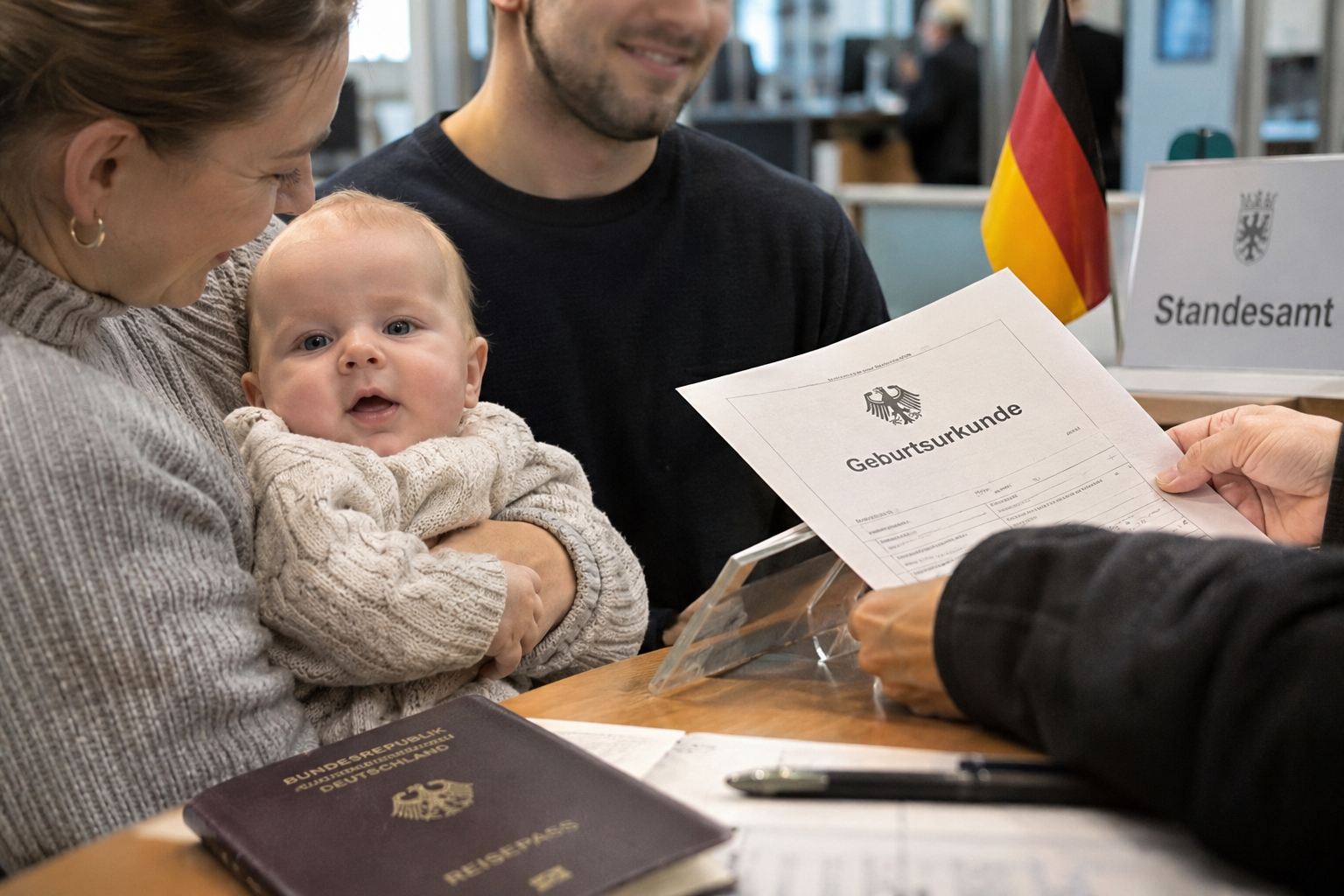
Germany provides a useful example of how local requirements can affect the first weeks after birth.
According to the German Federal Family Portal, births must be reported to the responsible civil registry office, known as the Standesamt, within one week.
Hospitals and registered birth centers generally forward the birth notification to the appropriate office. Parents may still need to provide identification, marriage documents, or declarations concerning the child’s name.
Birth in Germany also does not automatically guarantee German citizenship. The nationality of the parents and their residence status can affect the child’s eligibility.
Health Insurance for Newborns in Germany
German families must also arrange health insurance for their newborn.
Children may qualify for coverage through a parent’s statutory health insurance without an additional premium. Eligibility becomes more complicated when one parent has statutory insurance and the other has private coverage.
Parents comparing private insurance for newborns should pay particular attention to the enrollment deadline. Under Section 198 of the German Insurance Contract Act, an eligible newborn can be enrolled in a parent’s private health insurance retroactively to birth if the application is made within two months.
The provision includes protection against additional risk premiums and waiting periods when its conditions are met. The child’s requested coverage cannot exceed the insured parent’s coverage, and insurers may require that the parent had been insured for a period of up to three months.
The German Insurance Contract Act contains the full legal requirements.
Two calendar months should not automatically be treated as exactly 60 days. Parents need to calculate the actual deadline using the date of birth.
Check Health Insurance Coverage in the United States

American families planning to return home should also review how the birth affects their existing health insurance.
For eligible families using the US Health Insurance Marketplace, having a baby generally creates a special enrollment opportunity lasting 60 days.
The HealthCare.gov enrollment rules explain that qualifying families may obtain coverage beginning on the child’s date of birth, even when enrollment occurs afterward.
Employer-sponsored insurance plans may have different notification periods, so parents should contact their employer or insurance administrator promptly.
Families living overseas should also confirm that the child qualifies for the particular US plan. American citizenship alone does not establish eligibility for every domestic health insurance program.
Parents comparing private policies should also understand the difference between comprehensive coverage and limited-benefit products, as discussed in our review of US Health Advisors.
Apply for a Social Security Number
Parents of American citizen children born overseas will usually need to arrange a Social Security number.
The number is used for identification in federal records and can be necessary for tax and other administrative purposes.
Unlike a baby born in a US hospital, a child born overseas generally does not receive a Social Security number through a routine American hospital registration process.
The Social Security Administration requires documents establishing citizenship, age, and identity.
Its document checklist for foreign-born American children includes the Consular Report of Birth Abroad and US passport among acceptable evidence of citizenship.
Parents can ask the embassy, consulate, or responsible Social Security office about the appropriate application procedure.
Review Legal Parentage, Custody, and Travel Consent

Parents should also confirm that the birth documents accurately establish the child’s legal parents.
Beyond birth registration, parents may also want to review the difference between a will and a living trust, particularly when considering who should care for their child if both parents die.
Rules differ between countries, especially for unmarried parents, children born through assisted reproduction, and situations involving surrogacy.
A parent listed on a hospital record may still need to complete a separate legal acknowledgment of parentage.
Custody documents deserve attention when only one parent plans to travel with the child.
Some countries require written permission from the other parent or legal guardian. The US Department of State recommends checking the international travel requirements for minors before departure.
If the parents disagree about the child’s residence or travel, legal advice is important before making plans that could affect custody rights.
The Bottom Line
By the end of the second month, parents should ideally have completed local birth registration, identified the child’s citizenship status, contacted the relevant consular authorities, and arranged suitable health coverage.
A passport or citizenship document may take longer to arrive. Keeping copies of applications and appointment confirmations helps track what remains unfinished.
The biggest mistake is assuming that every country follows the same rules or deadlines.
Germany requires prompt birth registration and has a specific private insurance enrollment period. American citizenship documentation involves separate eligibility requirements and consular procedures.
Parents with unusual citizenship or custody circumstances should seek qualified legal advice in the relevant jurisdiction. A careful review early in the process can prevent missing documents and legal uncertainty from affecting the family’s future travel and residence plans.